Retort Machine Maintenance Checklist: How to Keep Your Retort Running Reliably
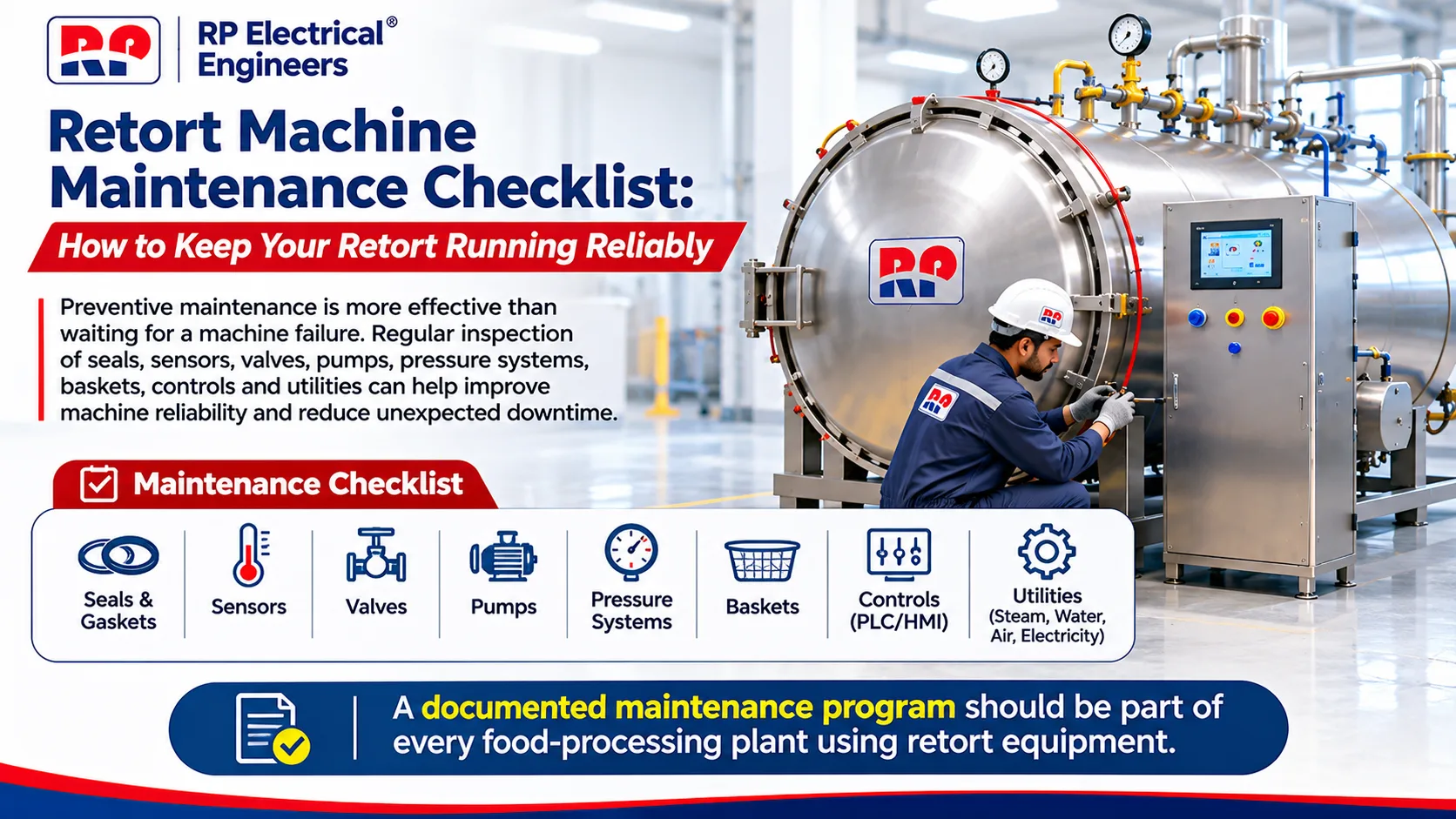
A retort machine operates under controlled temperature and pressure, making regular inspection and preventive maintenance extremely important. Poor maintenance can lead to unexpected downtime, inconsistent operation, seal leakage, sensor problems, pressure instability, longer production interruptions and increased repair costs. A planned maintenance schedule helps identify problems before they become major failures.
Why Retort Maintenance Matters
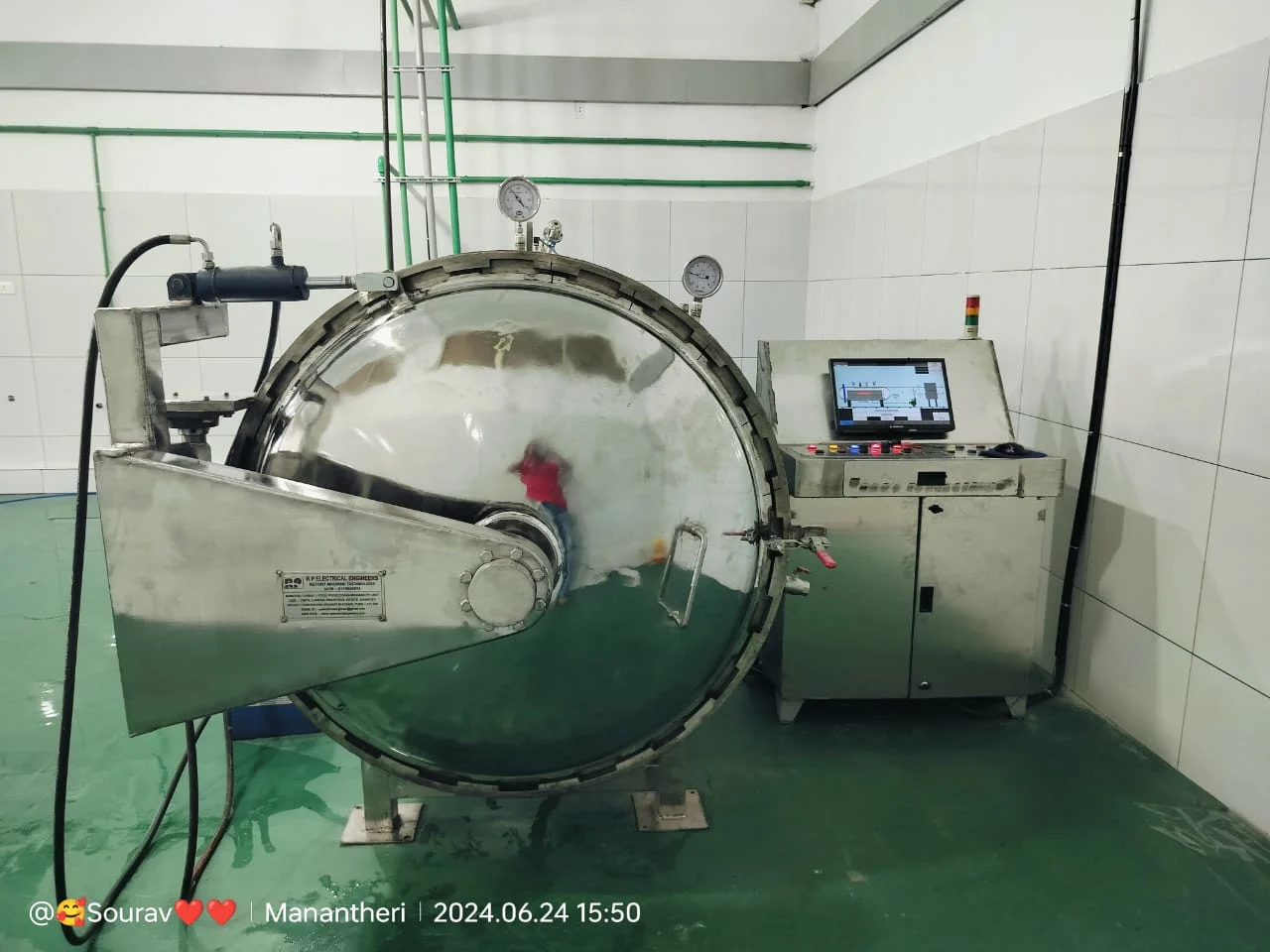
A retort is part of a critical food-processing operation. Its system may include a pressure vessel, door locking mechanism, gaskets, temperature sensors, pressure instruments, valves, pumps, steam components, water circulation, PLC/HMI controls, baskets and trolleys. All these components should function correctly.
Daily Maintenance Checklist
1. Inspect the Door Seal
Check the gasket for cuts, cracks, flattening, wear and product residue. A damaged gasket can cause leakage. Clean the sealing surface regularly.
2. Check Door Locking
Confirm that the door closes smoothly, the lock engages correctly, the safety interlock functions properly and hinges and locking components show no visible damage. Never operate a pressure vessel with a suspected door-lock problem.
3. Check for Leaks
Inspect steam connections, water pipes, air lines, valves, flanges and door seals. Unexpected leakage should be investigated.
4. Inspect the Control Panel
Check the HMI display, PLC status, alarms, indicator lights, emergency stop and electrical connections visible to operators. Record and investigate repeated alarms.
Weekly Maintenance
5. Check Water Circulation
For water spray or water immersion systems, inspect pumps, filters, nozzles, water lines and spray headers. Blocked nozzles or restricted circulation can affect machine performance.
6. Inspect Retort Baskets
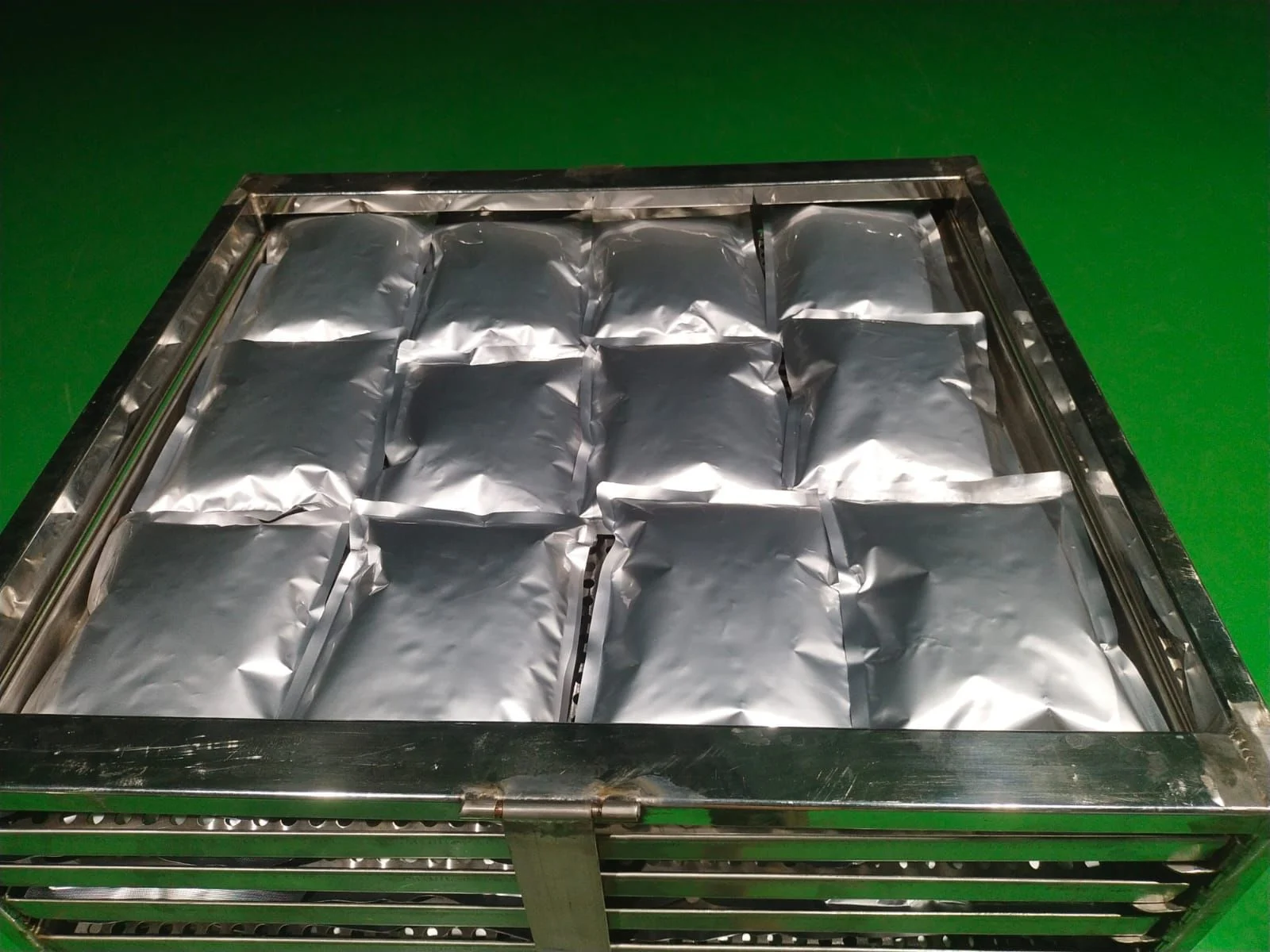
Check baskets, trays and racks for broken welds, bent sections, rust, sharp edges and product residue. Damaged baskets can make loading difficult and may damage packaging.
7. Inspect Trolleys
Check wheels, bearings, handles and alignment. A trolley carrying heavy product loads should move safely and smoothly.
Monthly Maintenance
8. Inspect Temperature Sensors
Temperature measurement is central to retort operation. Check sensors for physical damage, loose connections and abnormal readings. Calibration should follow the plant's quality and maintenance procedures.
9. Check Pressure Instruments
Inspect pressure gauges, pressure transmitters, air regulators and related connections. Unexpected pressure differences require investigation.
10. Inspect Valves
Check steam, water, air, drain and safety-related valves for leakage, poor movement or abnormal operation.
PLC and HMI Maintenance
Automatic retorts rely heavily on their control system. Periodically review alarms, verify programs, check sensor inputs, inspect electrical panel condition, back up machine settings where appropriate and protect access to critical process settings. Only trained personnel should change programmed process parameters.
Cleaning
A hygienic maintenance program should include regular cleaning. Focus on the retort chamber, baskets, racks, floor, drain, door gasket and external surfaces. Avoid allowing food residue to accumulate.
Utility Checks
Retort performance depends on reliable utilities. For steam, check pressure, availability and piping condition. For water, ensure adequate supply and quality. For compressed air, check pressure and moisture control where applicable. Inspect electrical connections and supply stability according to maintenance procedures.
Preventive Maintenance Schedule
- Daily: Visual inspection, leakage, gasket, control panel and cleaning.
- Weekly: Pumps, nozzles, baskets, trolleys and filters.
- Monthly: Valves, sensors, pressure instruments and electrical panel.
- Periodic: Calibration, safety-system testing, detailed mechanical inspection and planned servicing.
Actual intervals should follow the machine manufacturer's instructions and operating conditions.
Signs Your Retort Needs Attention
Investigate if you notice a cycle taking longer than normal, unstable temperature, pressure fluctuations, unusual pump noise, steam or water leakage, door sealing problems, frequent alarms, HMI communication issues or unexpectedly increasing packaging damage. Do not ignore repeated abnormalities.
Keep Maintenance Records
Maintain records containing the date, machine, inspection performed, problem found, corrective action, parts replaced, technician and next scheduled check. Maintenance records help identify recurring issues.
Spare Parts Planning
Keep frequently required components available where practical. These may include gaskets, sensors, valve components, electrical components, seals and filters. The exact spare-parts list depends on the retort model.
Operator Training
Operators should know correct loading, normal machine sounds, alarm handling, door safety, cleaning procedures and basic visual inspection. Operators are often the first people to notice changes in machine behaviour.
RP Electrical Engineers Retort Support
RP Electrical Engineers manufactures retort machines and food-processing equipment in Pune. Follow the specific operating and maintenance documentation supplied for your equipment and contact qualified technical personnel when required.
Conclusion
Preventive maintenance is more effective than waiting for a machine failure. Regular inspection of seals, sensors, valves, pumps, pressure systems, baskets, controls and utilities can help improve machine reliability and reduce unexpected downtime. A documented maintenance program should be part of every food-processing plant using retort equipment.
Learn more about our retort machines, water immersion retorts and retort sterilization process.
Related RP Electrical Resources
Explore these related solutions and guides from RP Electrical Engineers: